Nature’s Intelligent Anti-Inflammatory
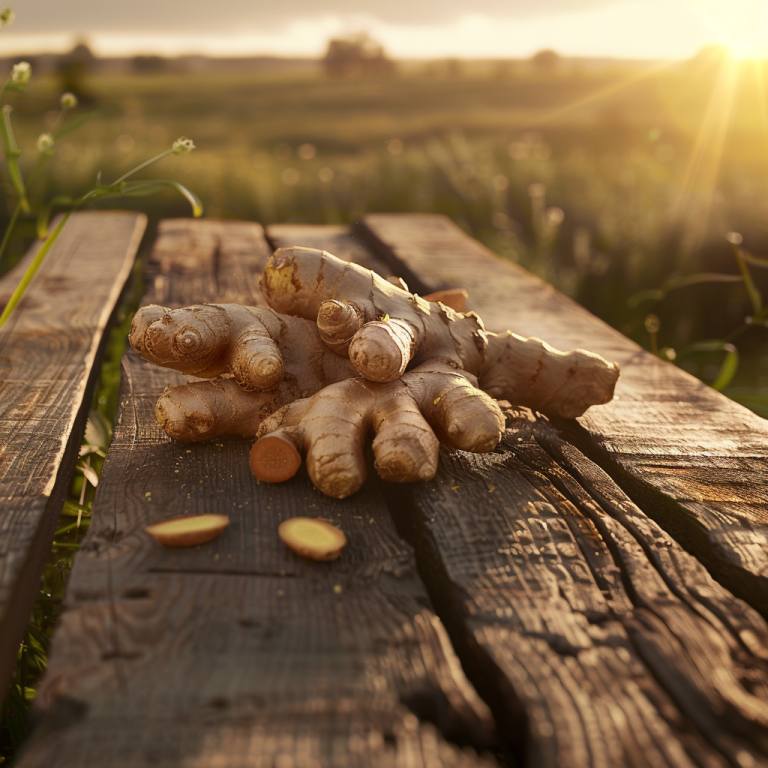
Ginger (Zingiber officinale) is known all around the world—not just as a spice, but also as a trusted natural remedy used in kitchens, folk medicine, and now modern science. Originally from Southeast Asia, it has been used in traditional Indian and Chinese medicine for centuries to treat inflammation, pain, fever, bloating, and nausea. In recent decades, growing scientific research has confirmed that ginger’s benefits are not just anecdotal but are based on multilevel, cell-based biological mechanisms.
Ginger contains over 400 identified compounds—among them, gingerols, shogaols, paradols, and zingerone play key roles. These bioactives are responsible for the plant’s anti-inflammatory, antioxidant, immunomodulatory, digestive-supportive, and neuroprotective effects.
Scientifically Proven Mechanisms of Action
1. Anti-inflammatory and Pain-Relieving Effects
Ginger’s active compounds inhibit the COX-2 and LOX enzymes, as well as the NF-κB signaling pathway, which are responsible for producing inflammatory mediators like prostaglandins and leukotrienes. Clinical studies have shown that ginger extract significantly reduces pain and inflammation in conditions such as osteoarthritis and rheumatoid arthritis.
2. Antioxidant Cellular Protection and ROS Reduction
Ginger’s bioactive molecules lower the concentration of reactive oxygen species (ROS)—such as superoxide anions, hydroxyl radicals, and peroxynitrite. It also inhibits lipid peroxidation, protecting cell membranes from oxidative damage. These properties help defend cells from chronic stress, inflammation, and premature aging.
3. Neuroprotective Effects via Nrf2 Activation
6-shogaol, a key compound in ginger, activates the Nrf2 antioxidant pathway and reduces inflammatory cytokines in the brain (e.g., TNF-α, IL-6), thereby offering protective effects for nerve cells. This is considered promising in the prevention of Alzheimer’s and Parkinson’s diseases.
4. Digestive and Microbiome Support
Ginger enhances gut motility, reduces bloating, nausea, and IBS symptoms. It also positively modulates the gut microbiota, improves intestinal barrier function, and decreases local inflammation.
5. Metabolic Syndrome, Blood Sugar, and Lipid Balance
Ginger has been shown to lower fasting blood glucose, triglyceride levels, and waist circumference, while improving insulin sensitivity. These effects are especially beneficial in obesity, diabetes, and metabolic syndrome.
6. Broad-Spectrum Biological Activity
Ginger’s key bioactives offer a wide range of health benefits:
- Antimicrobial: Effective against bacteria and viruses
- Antiallergenic: Reduces allergic responses
- Anticarcinogenic: May help prevent colorectal cancer
- Immunomodulatory: Balances T-cell responses and inflammation
7. Support in Autoimmune and Inflammatory Diseases
Ginger may be a valuable complementary agent in managing chronic inflammatory or autoimmune diseases such as:
- Ulcerative colitis
- Crohn’s disease
- Rheumatoid arthritis
- Lupus (SLE)
- Psoriasis
Its anti-inflammatory action can greatly improve the quality of life for those suffering from these conditions.
Clinical Evidence
- Clinical trials confirm that ginger significantly reduces pain and stiffness in osteoarthritis, and improves joint mobility.
- Its antioxidant effects help reduce cellular damage and oxidative stress.
- It may reduce the risk of cardiovascular diseases and cancer.
Why Is Ginger in Lost Garden Formulas?
In Lost Garden products, we use high-potency ginger extract standardized to 10% gingerols, ensuring targeted and scientifically backed bioactivity.
Ginger works synergistically with curcumin, bromelain, papain, and devil’s claw, making it an ideal component in our anti-inflammatory and cellular defense formulas.
Scientific References
https://pmc.ncbi.nlm.nih.gov/articles/PMC8840670/pdf/molecules-27-00775.pdf
https://pmc.ncbi.nlm.nih.gov/articles/PMC9779757/pdf/ijms-23-15545.pdf
https://pmc.ncbi.nlm.nih.gov/articles/PMC10933899/pdf/nutrients-16-00741.pdf
https://pmc.ncbi.nlm.nih.gov/articles/PMC10398691/pdf/ao2c04263.pdf
https://pmc.ncbi.nlm.nih.gov/articles/PMC6721508/pdf/ECAM2019-5054395.pdf
https://pmc.ncbi.nlm.nih.gov/articles/PMC9110206/pdf/OMCL2022-4748447.pdf
https://pmc.ncbi.nlm.nih.gov/articles/PMC9654013/pdf/molecules-27-07223.pdf
https://pmc.ncbi.nlm.nih.gov/articles/PMC8865113/pdf/IPHB_60_2033797.pdf
https://pmc.ncbi.nlm.nih.gov/articles/PMC6616534/pdf/foods-08-00185.pdf